“The Jesus They Removed” – Mel Gibson Reveals the Ancient Ethiopian Bible That Describes a Cosmic Christ the Western Church Hid for 1,700 Years
Mel Gibson has spent more than two decades carrying a vision that most people still don’t fully understand.
While the world celebrated The Passion of the Christ as a raw, unflinching portrayal of the final hours of Jesus, Gibson was already looking far beyond the cross.
He was looking at the ancient texts that described not only how Jesus died, but who he truly was before he ever stepped into human history.
What he found was a Bible most Christians have never seen.
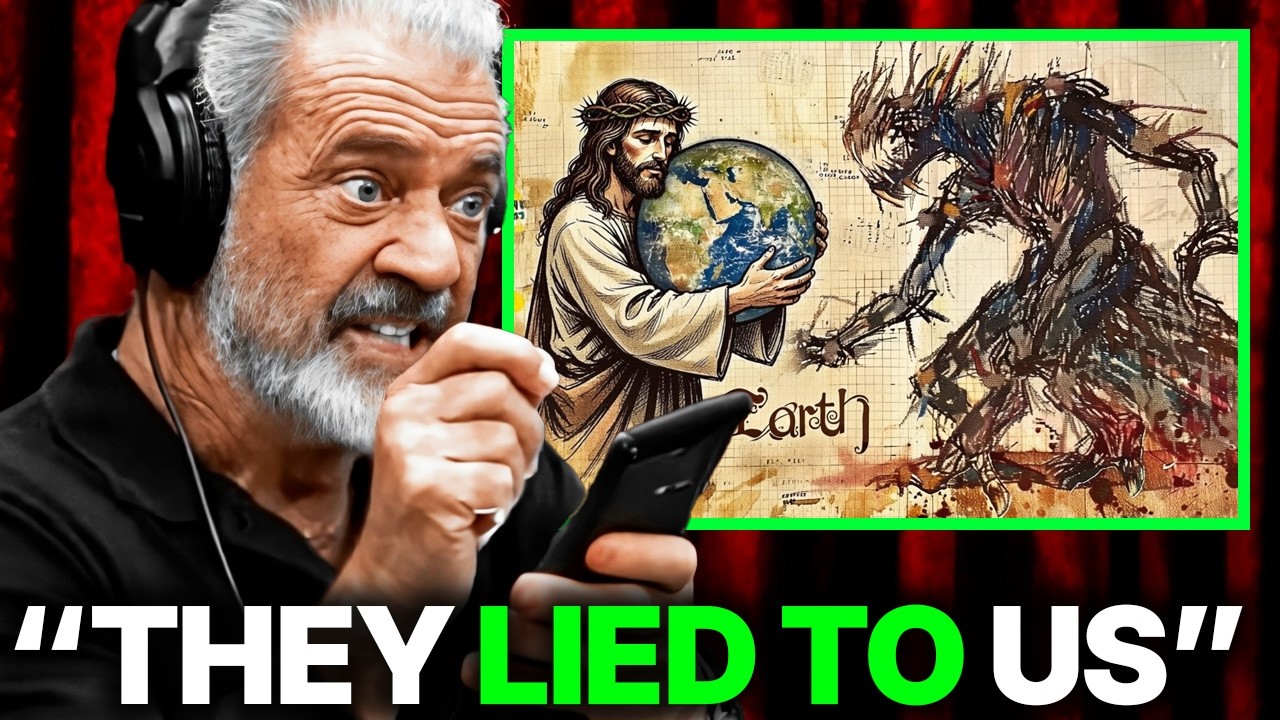
Preserved for nearly 2,000 years in remote Ethiopian monasteries perched on cliff faces accessible only by rope, the Ethiopian Orthodox Bible contains more books than the Western canon.
Among them are writings that were deliberately excluded from the version of scripture that would shape most of the Christian world for the next seventeen centuries.
These texts do not present Jesus as a gentle moral teacher who arrived, taught, and was killed.
They present him as an infinite cosmic being who chose to descend through seven heavenly realms, deliberately reducing his divine glory at each level so that even the highest angels would not recognize him.
The incarnation was not simply God becoming man.
It was the source of all existence executing the most consequential undercover mission in the history of creation.
The Ascension of Isaiah, one of the most theologically bold texts preserved only in the Ethiopian tradition, describes this descent in precise, almost cinematic detail.
Isaiah is taken upward through seven distinct heavens.
In the seventh heaven he sees the divine throne and the pre-incarnate Christ — the Beloved One — whose radiance is the source of every lesser light in every lower realm.
Then Isaiah watches something that should be impossible: the Beloved One prepares to descend.
At the threshold of the seventh heaven, Christ begins to reduce his glory.
Not hide it entirely, but reduce it.
He steps into the sixth heaven and the beings there see one of their own.
They do not recognize him.
He descends to the fifth, reduces again.
Each level, the most powerful being in the universe chooses, with full awareness, to become less visible.
By the time he reaches Earth, he appears as a human infant.
This is not poetic metaphor.
This is a structured cosmology.
The crucifixion, in this framework, is not merely the death of a righteous man.
It is the moment when the very source of existence experiences non-existence.
The resurrection is the full glory breaking free from the limits he willingly accepted — the cosmic reversal of the concealment that began in the seventh heaven.
Gibson has confirmed that The Resurrection of the Christ, scheduled as a two-part film with the first part releasing on Good Friday 2027, will follow this exact vision.
He has described the project as “super ambitious” and admitted he wasn’t sure he could pull it off.
But the direction is clear: he is not interested in retelling the familiar story.

He wants to show the Christ the earliest Christians actually experienced — a being who moved through dimensions, concealed his glory level by level, and broke the boundaries between heaven, hell, and Earth.
For seventeen centuries, Ethiopian monks copied these texts by hand in the ancient language of Ge’ez, in rooms lit by oil lamps, on cliffs accessible only by rope.
They believed the world would one day need what they were protecting.
They never imagined a Hollywood filmmaker would one day put their vision on the largest screens on Earth.
Why were these passages removed from the Western Bible?
The historical record is uncomfortable but clear.
In the fourth century, as Christianity moved from a persecuted minority faith to the official religion of the Roman Empire, councils were called to standardize doctrine, liturgy, and scripture.
A decentralized, mystical faith that allowed believers direct encounters with divine realms was difficult to regulate.
Texts that described personal ascent through the heavens, cosmic journeys, and a Christ who concealed his glory level by level were quietly set aside.
Ethiopia was not present at those councils.
Ethiopian bishops never received the decrees.
So they kept copying the same scriptures their ancestors had received when Christianity first arrived in the fourth century.
They simply continued the tradition while the Western canon was being shaped by political and theological pressures.
The result is two parallel streams of Christianity.
One became the dominant version known to most of the world.
The other, preserved in the Ethiopian highlands, kept the fuller, more mystical vision alive.
Gibson’s decision to base his sequel on this suppressed framework is not a gimmick.
It is a deliberate return to the earliest Christian imagination — the one that existed before institutions decided what believers were allowed to know.
The fall of the angels, the descent through seven realms, the concealment of glory, the breaking of death from the inside — all of it is already written in texts that have waited nearly 2,000 years for a global audience.
When audiences sit in theaters in 2027, they will not be watching a Hollywood invention.
They will be watching the oldest Christian vision of Jesus returning to the world after centuries of being kept out of sight.
The monks who copied those manuscripts by candlelight never imagined their words would one day reach billions of people on the largest screens ever built.
They simply copied.

They prayed.
They trusted that truth deserved protection more than it deserved comfort.
For nearly seventeen centuries, they were right.
And now, the silence is ending.